
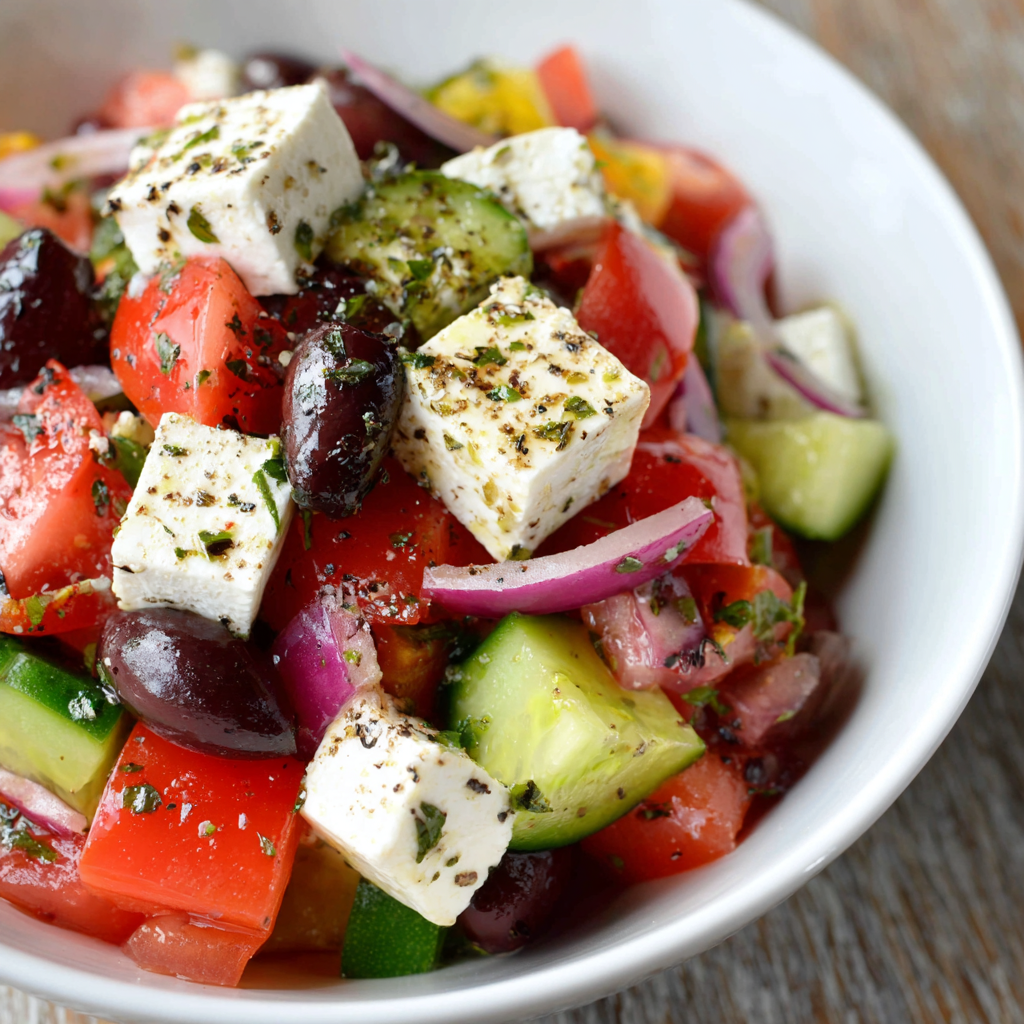
If you are craving a salad that bursts with fresh, vibrant flavors and embodies the heart of Mediterranean cuisine, this Greek Salad is an absolute must-try. Combining crisp cucumbers, juicy tomatoes, briny olives, and creamy feta cheese, all brought together with a drizzle of rich olive oil, this dish is a celebration of simplicity and taste. Whether you’re looking for a light lunch, a colorful side, or a dish that transports your taste buds straight to the sun-soaked shores of Greece, this Greek Salad is a timeless favorite that never disappoints.
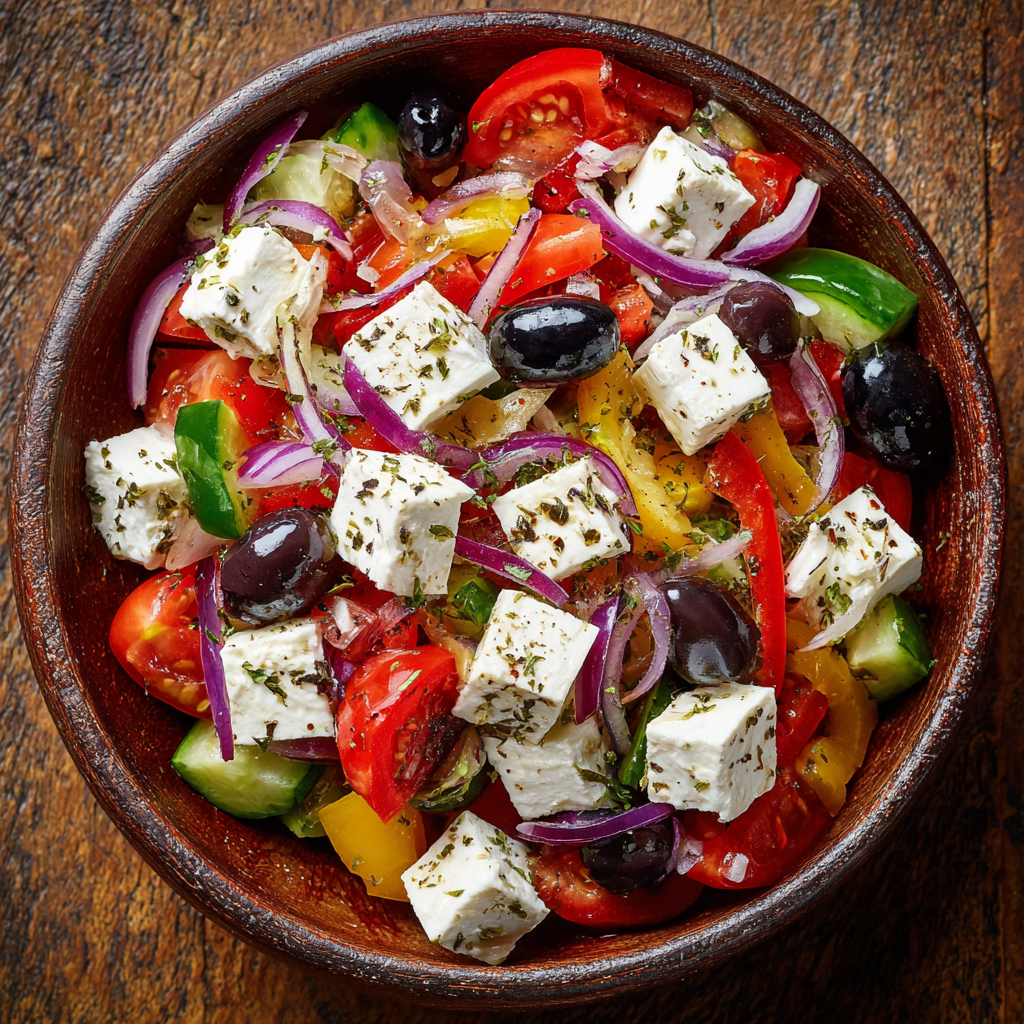
Ingredients You’ll Need
This Greek Salad may be simple in ingredients, but each one plays a crucial role in creating its signature harmony of textures and flavors. Freshness and quality truly make all the difference here, turning basic veggies and cheese into a marvelous, satisfying dish.
- Cucumber: Choose firm, crisp cucumbers for a refreshing crunch that balances the other ingredients.
- Tomatoes: Opt for ripe, juicy tomatoes to add natural sweetness and vibrant color.
- Olives: Use briny, flavorful olives like Kalamata to give the salad its distinctive Mediterranean kick.
- Feta cheese: Crumbled feta adds a creamy, salty contrast that melts beautifully into the salad.
- Olive oil: A drizzle of high-quality extra virgin olive oil enriches the salad with fruity, peppery notes.
How to Make Greek Salad
Step 1: Prepare the Vegetables
Start by washing your cucumbers and tomatoes thoroughly. Then, chop the cucumbers into bite-sized chunks and cut the tomatoes into wedges or thick slices, depending on your preference. This ensures that every forkful is packed with fresh, juicy bites that complement each other perfectly.
Step 2: Combine the Ingredients
Gently toss the chopped cucumbers and tomatoes with olives and crumbled feta in a large salad bowl. The olives add a lovely depth of flavor, while the feta creates a creamy texture that binds the salad together delightfully.
Step 3: Dress with Olive Oil
Finish the salad by drizzling a generous amount of extra virgin olive oil over the mixture. This not only brings all the ingredients together but also adds a silky richness that enhances the natural flavors without overpowering them.
How to Serve Greek Salad
Garnishes
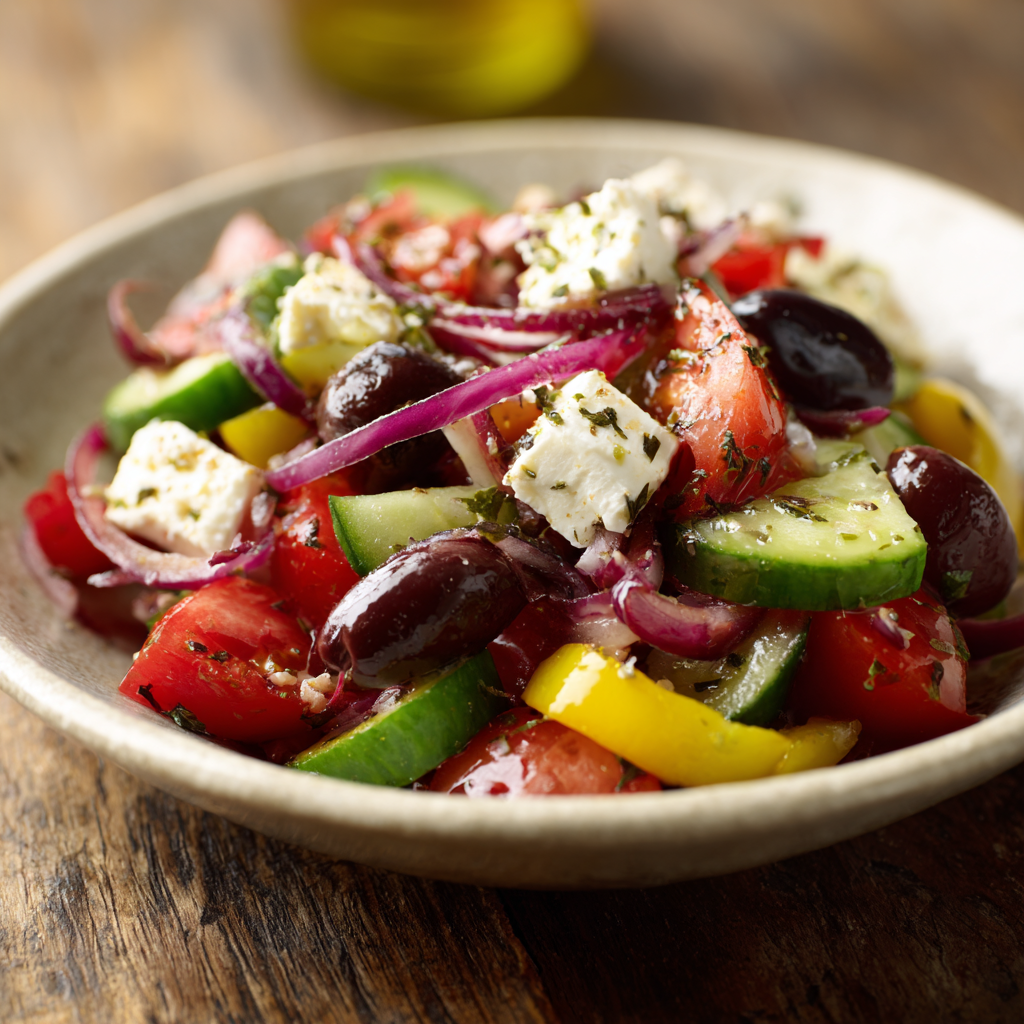
For an extra special touch, sprinkle freshly chopped oregano or a few thin slices of red onion on top. A squeeze of fresh lemon juice can brighten up the salad even more, giving it that authentic zing and lift that’s truly irresistible.
Side Dishes
Greek Salad pairs wonderfully with grilled meats, especially lamb or chicken, as well as seafood. It also complements hearty pita bread or a crusty loaf, allowing you to scoop up all the delicious juices left behind on the plate.
Creative Ways to Present
Consider serving your Greek Salad in a large, rustic bowl lined with fresh lettuce leaves for a pop of greenery. For a modern twist, try layering the ingredients in a clear glass jar or individual cups for a fun, portable option perfect for picnics or packed lunches.
Make Ahead and Storage
Storing Leftovers
Store any leftover Greek Salad in an airtight container in the refrigerator. To avoid sogginess, keep the olive oil separate and dress the salad just before serving. This helps maintain the fresh, crisp texture of the vegetables and the creamy tang of the feta.
Freezing
Because Greek Salad is made with fresh vegetables and cheese, freezing is not recommended. Freezing would alter the texture of the cucumbers and tomatoes and cause the feta to become grainy, so it’s best enjoyed fresh.
Reheating
Greek Salad is designed to be enjoyed cold or at room temperature, so reheating is not necessary. If your salad has been refrigerated, simply let it sit at room temperature for a few minutes before serving to bring out the flavors.
FAQs
Can I add lemon juice to my Greek Salad?
Absolutely! Adding fresh lemon juice is a fantastic way to add brightness and an extra layer of freshness to your Greek Salad, making each bite even more vibrant.
What kind of olives work best in Greek Salad?
Kalamata olives are the classic choice for Greek Salad due to their rich, tangy flavor and meaty texture. However, feel free to experiment with other varieties if you prefer.
Is feta cheese essential in Greek Salad?
Feta cheese is traditional and brings a creamy, salty contrast that’s hard to replicate. While you can omit it for dietary reasons, the salad’s character truly shines with feta included.
Can I prepare Greek Salad in advance?
You can chop the vegetables in advance, but it’s best to mix and dress the salad right before serving to keep everything fresh and crisp.
Is Greek Salad suitable for a vegan diet?
The classic Greek Salad includes feta cheese, which is dairy-based. For a vegan version, you can substitute with a plant-based cheese or simply omit it, maintaining the rest of the vibrant ingredients.
Final Thoughts
There’s something so comforting and invigorating about a well-made Greek Salad. It’s effortless, fresh, and packed with layers of flavor that make every bite a delight. Whether you’re serving it for a casual lunch, a family dinner, or a festive gathering, this Greek Salad is sure to become a beloved staple in your kitchen. Give it a try and watch how it quickly turns into one of your favorite go-to dishes!