
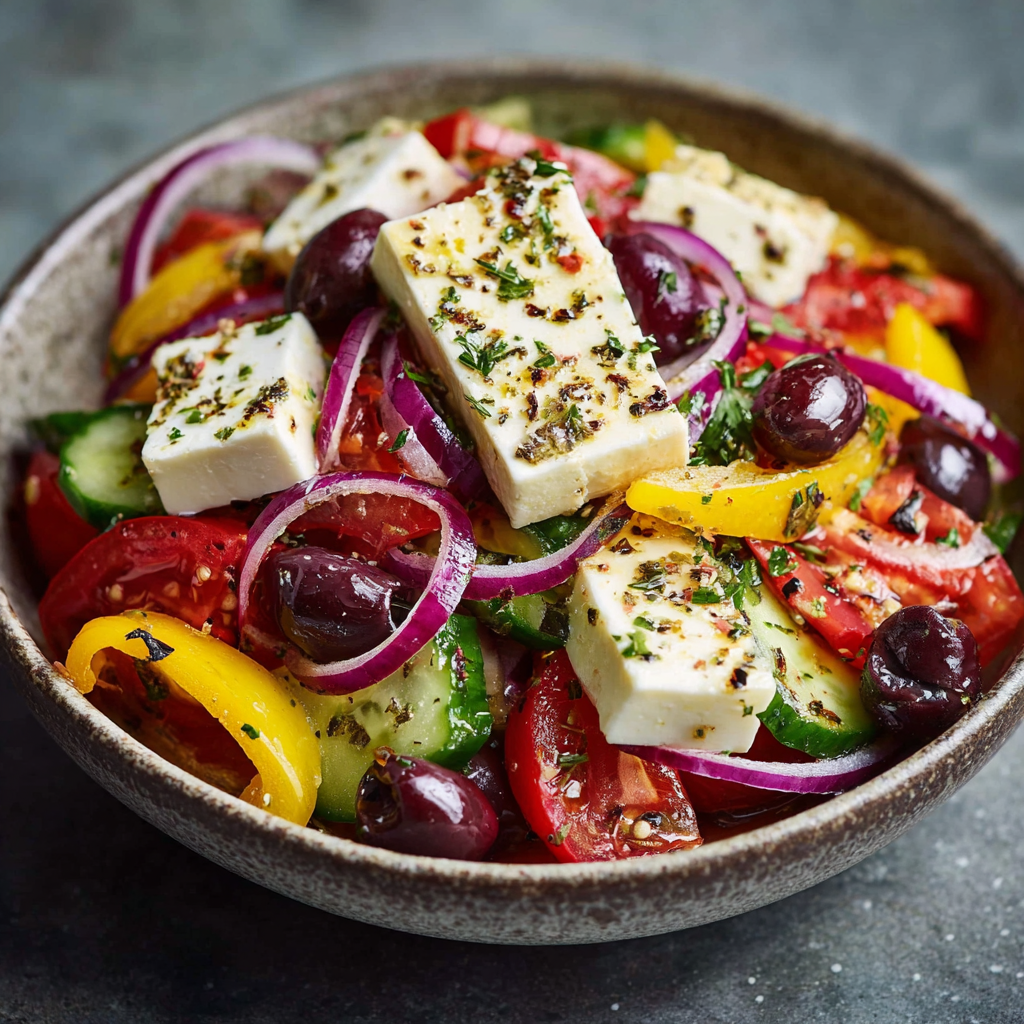
If you’re craving a dish that’s bursting with fresh, vibrant flavors and makes you feel like you’ve just stepped into the sunny Mediterranean, then this Greek Salad is exactly what you need. This salad combines crisp cucumbers, juicy tomatoes, salty olives, and creamy feta cheese, all brought together with a simple drizzle of olive oil. Not only is it a feast for your taste buds, but it’s also wonderfully nourishing, packed with vitamins and wholesome fats. Whether as a light lunch or a side to your main meal, the Greek Salad never fails to impress with its colorful, refreshing charm.
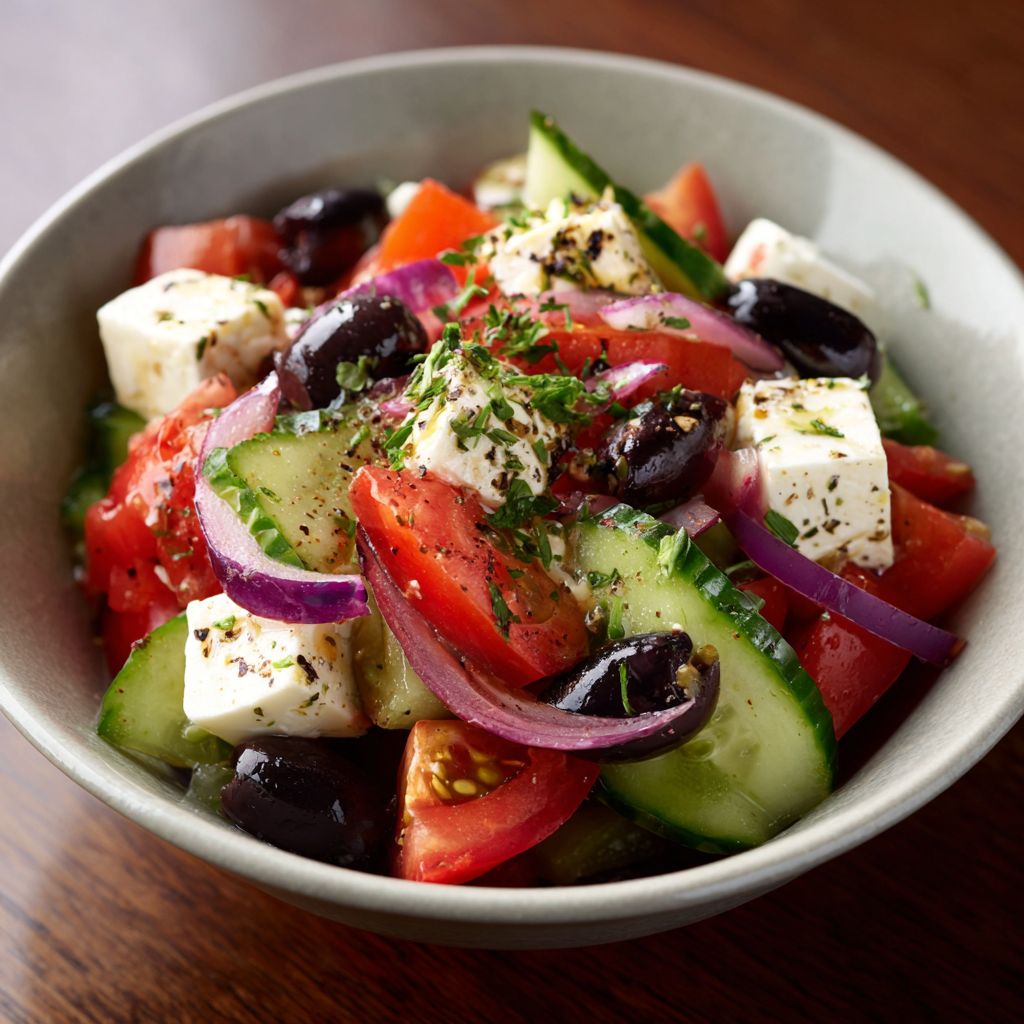
Ingredients You’ll Need
The beauty of this Greek Salad lies in its simplicity and the quality of its ingredients. Each one plays a vital role in delivering that perfect balance of taste, texture, and color that makes this dish so special.
- 1 cup cucumber (chopped): Crisp and cooling, cucumbers add a refreshing crunch that contrasts beautifully with the softer ingredients.
- 1 tomato (chopped): Juicy and slightly sweet, tomatoes provide a burst of vibrant color and savoriness.
- ¼ cup feta cheese: This crumbly, salty cheese is the star that adds creaminess and depth of flavor.
- 5 olives: Tiny pockets of briny goodness that bring an unmistakable Mediterranean flair.
- 1 tbsp olive oil: Rich and fruity, this is the dressing that ties all the flavors together effortlessly.
How to Make Greek Salad
Step 1: Prep Your Vegetables
Start by thoroughly washing your cucumber and tomato to ensure every bite is clean and fresh. Chop them into bite-sized pieces that are easy to eat and spread evenly throughout the salad. This first step sets the tone for the entire dish with fresh textures and vibrant colors.
Step 2: Combine the Ingredients
In a medium bowl, gently mix together the chopped cucumber, tomato, crumbled feta cheese, and olives. The key here is to be gentle so the feta keeps its texture, and the veggies don’t get crushed—this helps preserve their individual flavors and textures.
Step 3: Drizzle with Olive Oil
Finish off by drizzling a tablespoon of good-quality olive oil over the salad. Don’t be shy; the olive oil is what enriches the salad and brings all the components together into a harmonious whole. Toss lightly if you like, just enough to coat everything evenly.
How to Serve Greek Salad
Garnishes
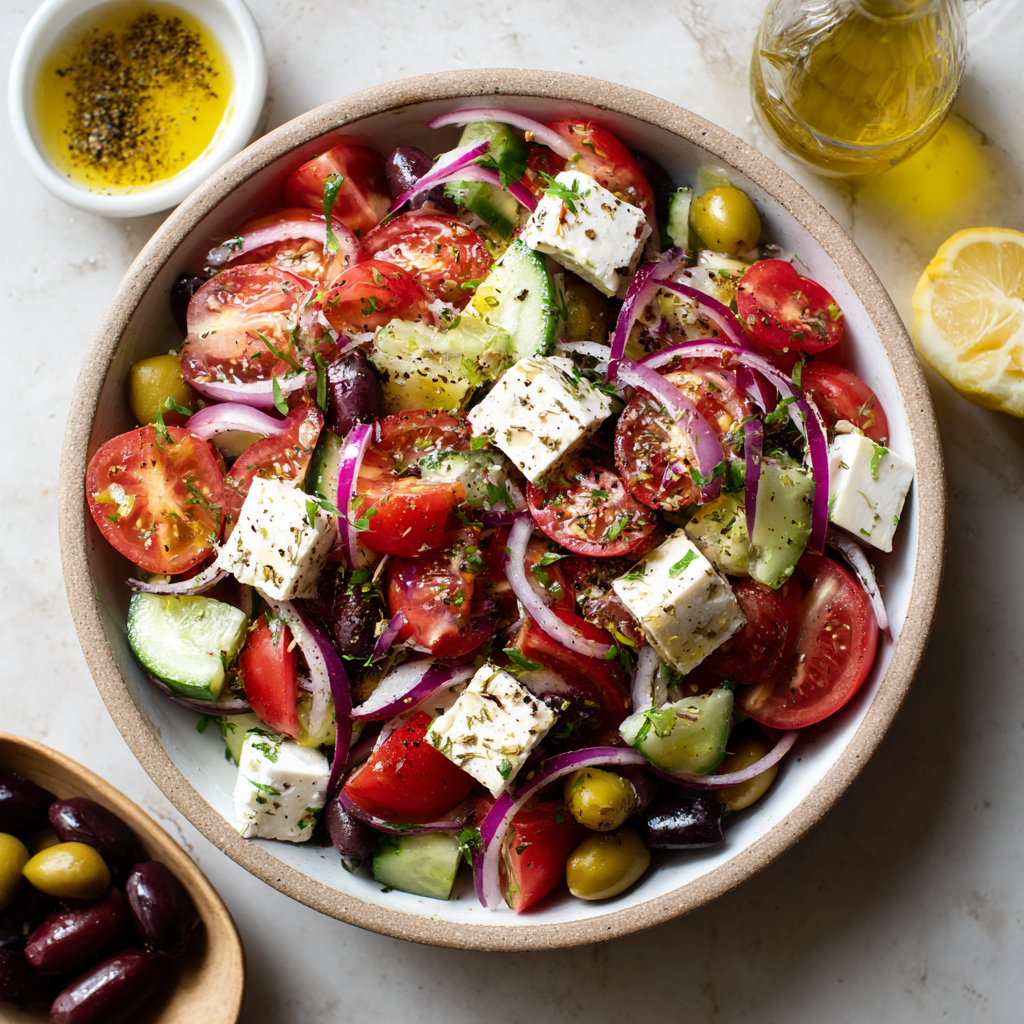
For an extra touch of flavor and visual appeal, sprinkle a pinch of dried oregano or freshly cracked black pepper on top. A few fresh basil leaves or a handful of chopped fresh parsley can also add a lovely herbal freshness that complements the Greek Salad beautifully.
Side Dishes
This Greek Salad pairs wonderfully with grilled meats like lamb or chicken, or alongside warm crusty bread to soak up the delicious olive oil and juices. It’s also an excellent light companion to hearty dishes like moussaka or spanakopita, balancing richer flavors with its refreshing presence.
Creative Ways to Present
Take your Greek Salad up a notch by serving it in individual glass jars for a charming picnic look, or layer it in a clear bowl to showcase all the colorful ingredients. You can also skewer chunks of feta, cucumber, and tomato with olives for a fun, bite-sized twist that makes a great appetizer.
Make Ahead and Storage
Storing Leftovers
If you have any leftovers, store them in an airtight container in the refrigerator for up to 24 hours. Keep in mind that the cucumbers and tomatoes may release some juice, so give the salad a light stir before serving again.
Freezing
Because this Greek Salad is made with fresh vegetables and cheese, it’s best enjoyed fresh and does not freeze well. Freezing will cause the ingredients to lose their crisp texture and fresh flavor, so stick to making just enough for immediate enjoyment.
Reheating
This salad is best served cold or at room temperature, so no reheating is needed. If you prefer, you can let it sit out for a few minutes after taking it from the fridge to take the chill off before serving.
FAQs
Can I add other vegetables to Greek Salad?
Absolutely! While the classic Greek Salad sticks to cucumbers, tomatoes, olives, and feta, adding red onion, bell peppers, or even radishes can offer extra crunch and flavor variations.
Is Greek Salad healthy for weight loss?
Yes, Greek Salad is low in calories but high in fiber, vitamins, and healthy fats from olive oil and feta, making it a nourishing choice that can fit well into a weight loss plan.
Can I use a different cheese instead of feta?
Feta is traditional and adds a signature tang, but you can experiment with other crumbly cheeses like goat cheese or queso fresco if you want a milder or creamier flavor.
What kind of olives should I use?
Greek Salad traditionally uses Kalamata olives because of their rich, slightly smoky taste, but black or green olives can also work depending on your preference.
How long does Greek Salad stay fresh?
Best enjoyed fresh, Greek Salad can keep in the fridge for up to 24 hours. After that, the vegetables tend to get soggy and lose their delightful crunch.
Final Thoughts
There is something truly magical about the simplicity and freshness of Greek Salad. It’s a dish that effortlessly brings a taste of the Mediterranean to your table, bursting with wholesome ingredients that are as good for your body as they are for your soul. Next time you want something light yet satisfying, colorful yet easy, give this Greek Salad a try—you’ll wonder why you hadn’t made it sooner!
https://shorturl.fm/oI5mB
https://shorturl.fm/sMf9P